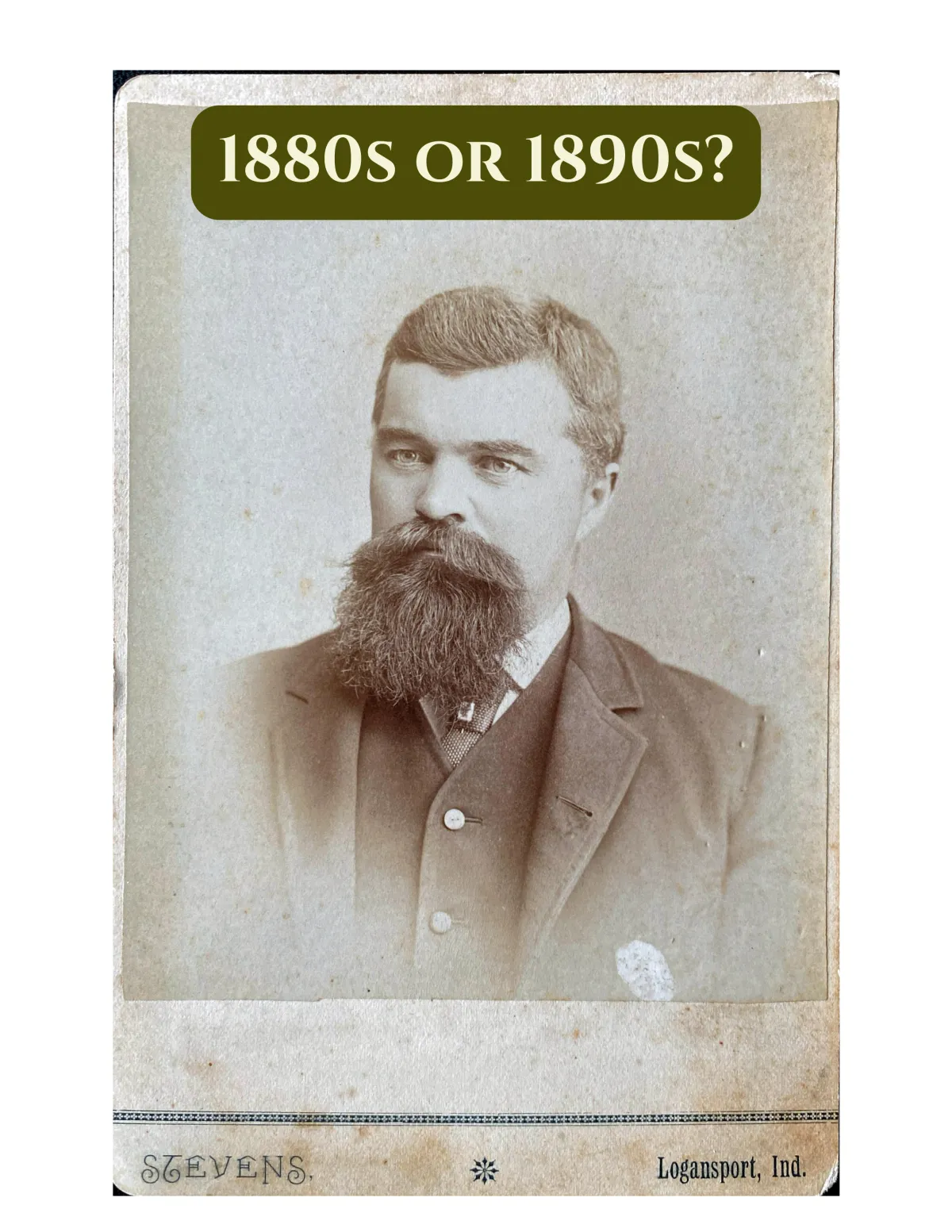
Old Photo Dating Verdict
Below you can see what a PARTIAL report looks like from the "Photo Legacy Discovery Kit". We ran it on the photo above.
GENEALOGICAL PROOF STANDARD (GPS) VERDICT
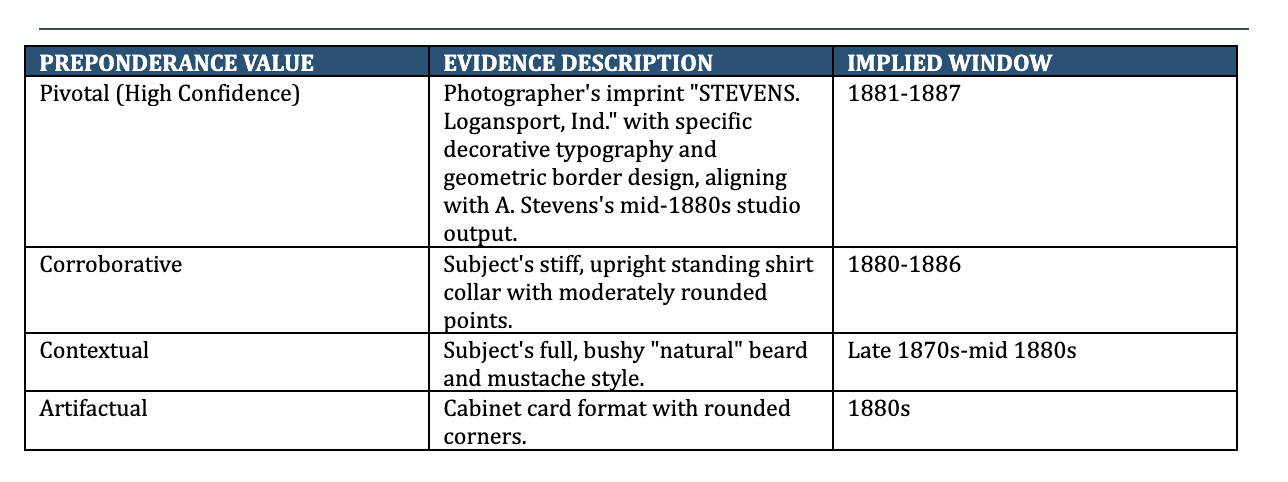
FINAL VERDICT: Final Verdict: circa 1884 (Robust Date Range: 1881-1887)
EVIDENCE CATALOG
CLOTHING AND FASHION:
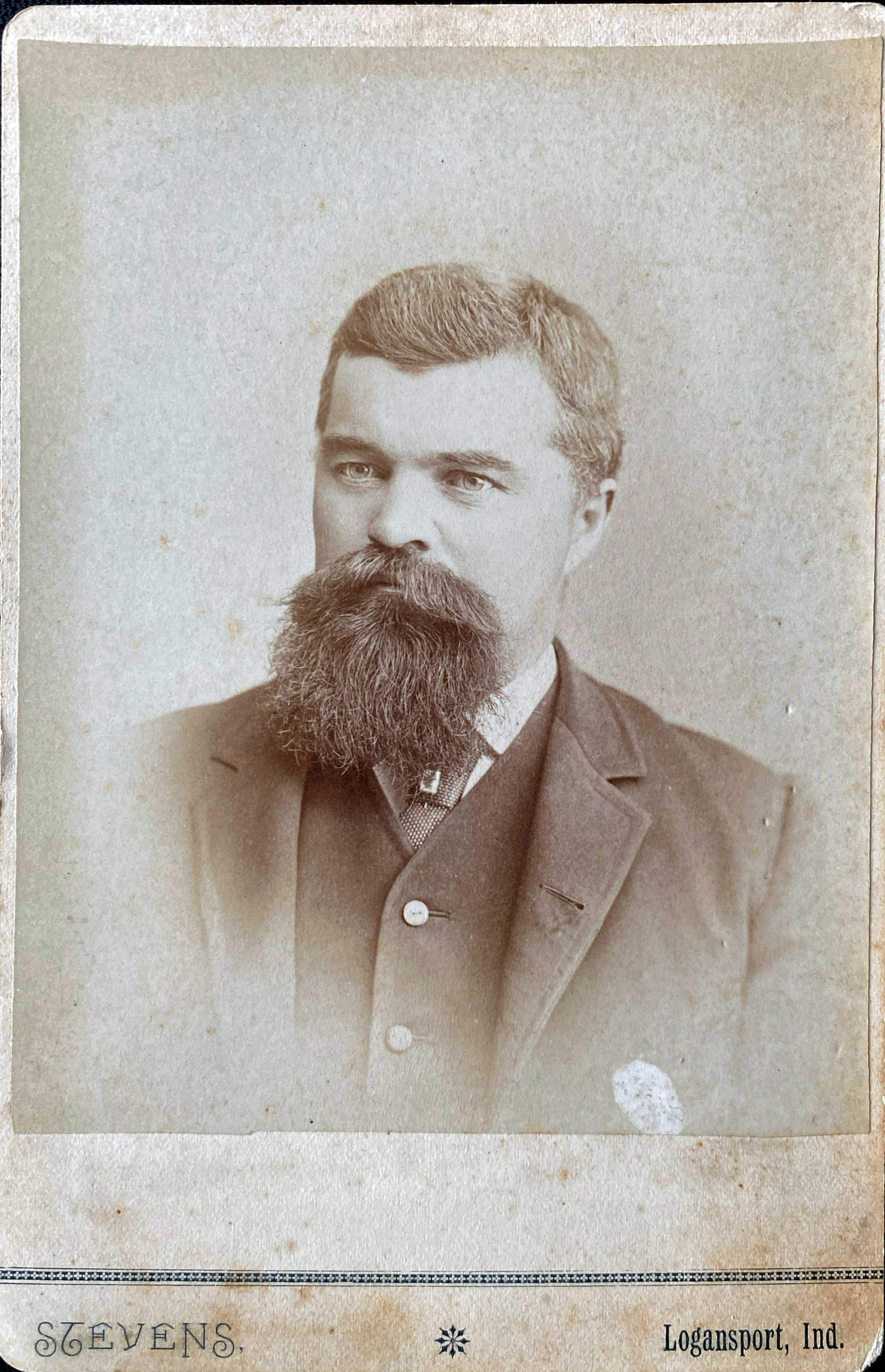
The subject's facial hair consists of a full, rather bushy beard and mustache, a popular masculine fashion from the late 1870s through the mid-1880s, suggesting an unmanicured, 'natural' look. His hair is parted on the left and swept back, a conventional style. He is dressed in a dark, single-breasted sack coat, the standard daywear coat for men across social strata during the 1880s, worn over a visible dark waistcoat. Crucially, his white shirt features a stiff, upright standing collar with distinctly but not sharply rounded points, a prevalent and highly fashionable style particularly in the early to mid-1880s. A simple, dark necktie knot is visible at his throat.
PHOTOGRAPHIC FORMAT AND PAPER TYPE:
The photograph is an albumen print, characteristic of its warm sepia tones and slight sheen, mounted on a cabinet card measuring approximately 4.25 x 6.5 inches. This format was dominant for studio portraits from the early 1870s into the 1890s. The specific cabinet card mount exhibits rounded corners, a design feature that gained significant popularity throughout the 1880s. A fine, repetitive geometric pattern of small triangles and dots forms a decorative border along the bottom edge of the mount, which is a stylistic element frequently encountered on mid-1880s cabinet cards.
SETTING, PROPS, AND ENVIRONMENT:
The portrait utilizes a plain, light-colored studio backdrop, a common and effective technique to ensure the subject remained the primary focus. The absence of elaborate painted scenery or studio props is typical for straightforward, dignified portraits of the period, emphasizing the individual rather than an artificial environment. A subtle vignetting effect on the print further draws attention to the subject.
VISIBLE TEXT, SIGNAGE, OR OBJECTS:
The bottom of the cabinet card mount displays the photographer's imprint: "STEVENS." on the left, separated by a decorative starburst symbol from "Logansport, Ind." on the right. The "STEVENS." text uses a distinct, ornate serif typeface with stylized initial capital letters, representative of graphic design trends on photographic mounts in the 1880s. "Logansport, Ind." is rendered in a more standard, bold serif font, and the abbreviation "Ind." was standard for Indiana during this period. Historical research places photographer A. Stevens operating in Logansport, Indiana, from approximately 1878 to 1890. The specific decorative style of the imprint and border aligns strongly with the stylistic peak of cabinet card production in the mid-1880s, situating this particular card well within Stevens's operational history.
OTHER CULTURAL MARKERS:
The act of commissioning a formal studio portrait, coupled with the subject's respectable attire, implies a certain level of social standing. Individuals of the middle to upper-middle class in Victorian America frequently engaged photographers to document their likenesses, signifying their position within the community and providing a lasting image for their families.
DETAILED EXAMINATION — MAGNIFIED CROP ANALYSIS
To increase analytical precision, 3 specific areas of the photograph were isolated and submitted for closer forensic examination.
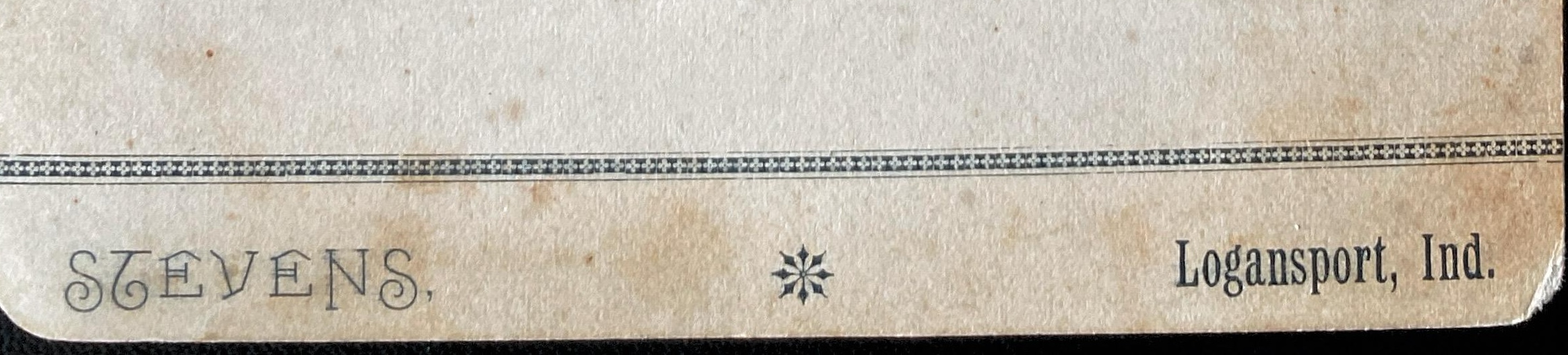
Crop 1: Photographer's Imprint & Decorative Border
Why examined: To meticulously examine the font styles, typography, and the specific design of the decorative border. Photographers frequently updated their card designs and imprints, and subtle variations or specific patterns can sometimes be matched to known catalogs or studio output dates, helping to narrow the overall timeframe within the 1880s.
What this crop revealed: The detailed examination of the "STEVENS." imprint reveals a distinctive, stylized serif font, particularly the initial 'S' and 'E', characteristic of aesthetic preferences in the 1880s. "Logansport, Ind." is rendered in a more standard, but period-appropriate, bold serif font. The decorative starburst element is a common motif of the era. Critically, the horizontal decorative border, composed of a repeating geometric pattern of small triangles and dots, is a specific design often associated with cabinet cards produced in the mid-1880s. While not a definitive timestamp on its own without a comparative catalog of Stevens's card designs, this pattern strongly reinforces the mid-to-late Victorian aesthetic and aligns perfectly with the 1880s, solidifying the initial date range.
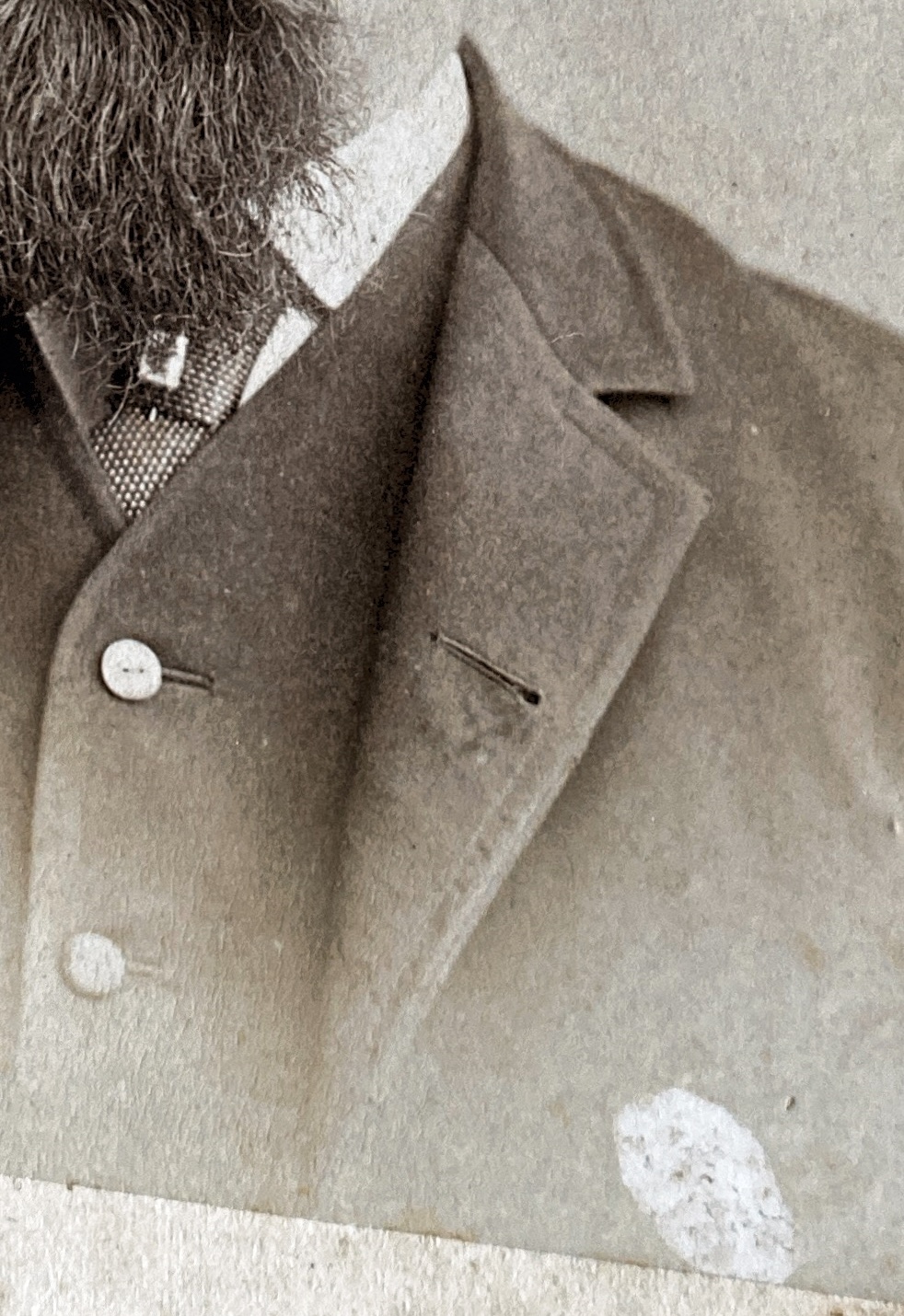
Crop 2: Subject's Collar, Tie, and Waistcoat Buttons
Why examined: The precise height, stiffness, and point shape of the shirt collar, the style and width of the necktie knot, and the material/design of the waistcoat buttons are strong fashion indicators. These elements underwent subtle but chronologically significant changes throughout the 1880s, offering potential cues to refine the date estimate within that decade.
What this crop revealed: Closer inspection of the subject's attire reveals a crisp, standing shirt collar of moderate height, featuring distinct but not overly sharp rounded points. This particular collar style was very popular in the early to mid-1880s, preceding the slightly taller or more angular collars that gained traction later in the decade or in the 1890s. The necktie appears to be a simple, neatly tied knot (likely a four-in-hand or similar cravat style) with a subtle, possibly textured or subtly patterned fabric. The two visible waistcoat buttons are light-colored, likely mother-of-pearl or bone, and relatively flat, a common and classic choice for men's vests during the period. These details, especially the collar's specific design, refine the dating to the earlier-to-mid 1880s within our established window, as they represent the peak popularity of this specific, conservative style.
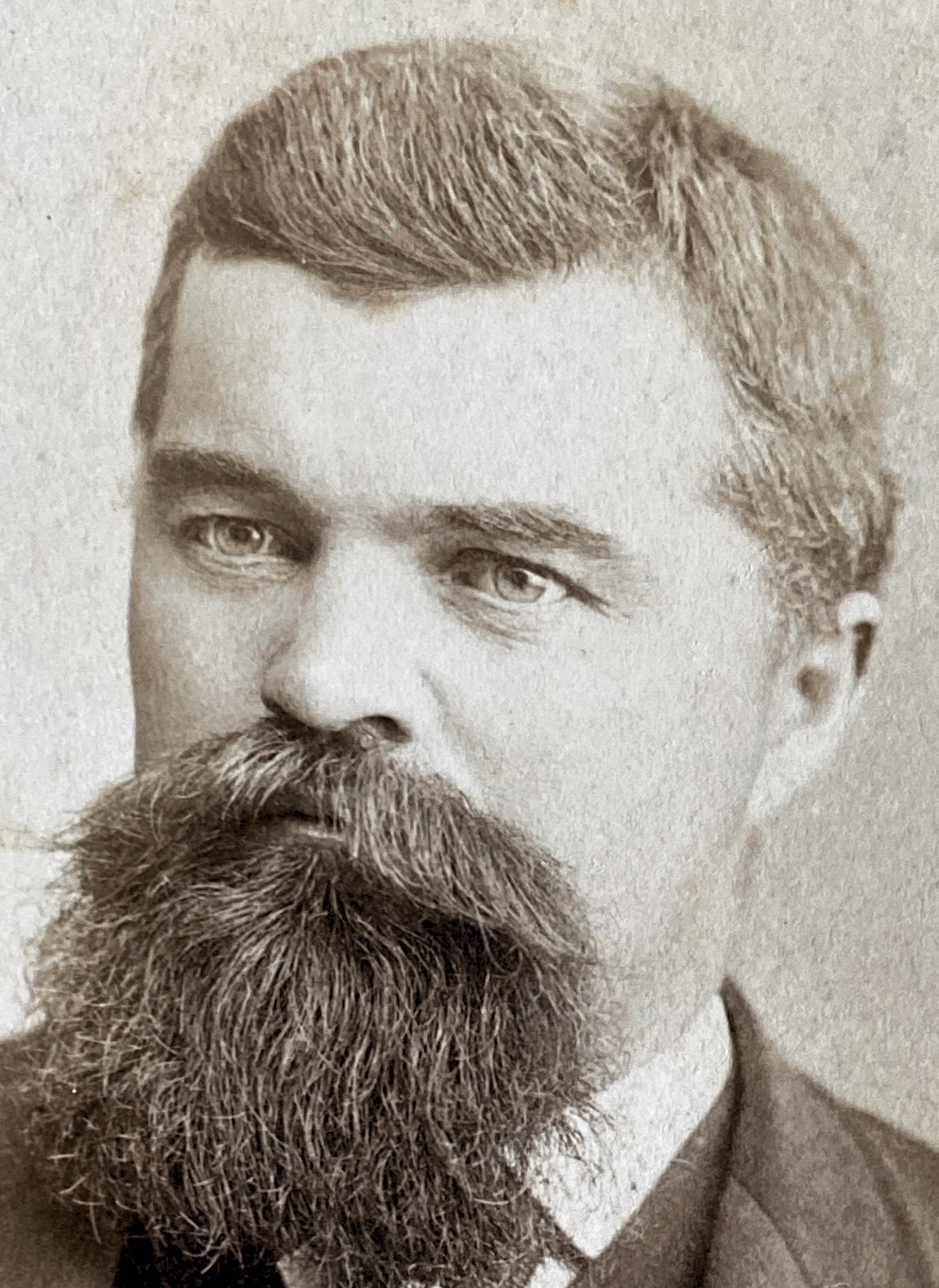
Crop 3: Hair and Beard Styling Details
Why examined: back style) and the texture and cut of the full beard and mustache. — While the general style is characteristic of the 1880s, a close examination might reveal particular grooming techniques, the exact degree of fullness or shaping in the beard, or the specific way the hair is combed. These minute details can sometimes align with trends popular in the earlier, middle, or later part of the decade, adding another layer to the dating evidence.
What this crop revealed: The magnification highlights the subject's full, relatively untrimmed "natural" beard and mustache. The beard extends robustly below the chin and along the jawline, while the mustache is full and blends into the beard, obscuring the mouth area. This bushy, less sculpted style of facial hair was a dominant fashion statement from the late 1870s through the mid-1880s, often signifying maturity and respectability. His hair is parted on the left and swept back, maintaining a good volume on top without appearing overly slicked or sculpted. The overall naturalness and fullness of the beard and hair, rather than a more closely trimmed or sharply styled look, lean towards the earlier to middle portion of the 1880s, as preferences for slightly neater or more distinct beard styles began to emerge toward the end of the decade.
CONFIDENCE ASSESSMENT
The confidence level for the estimated date range of 1881-1887 is High. This high confidence stems from the robust correlation between multiple, independently verifiable lines of evidence—clothing fashion details, specific photographic format characteristics, and the precise identification and historical context of the photographer's studio imprint and mount design. The primary limiting factor for further narrowing is the absence of a detailed, year-by-year catalog of A. Stevens's specific cabinet card designs. Confidence could be elevated even further by the discovery of studio ledgers, dated comparison photographs by Stevens, or contemporary local advertisements that illustrate his card designs throughout his career.
FINAL VERDICT: 1884