How AI Dates Your Old Photos
How I Use AI to Date Old Photos & And Why It Matters More Than You Think
Most of us have a shoebox somewhere. A pile of old photos with no names on the back, no dates, no context. Just faces staring out from another era — people you half-recognize, or maybe don't recognize at all.
One of the most common questions I hear from families is:
"When was this taken?"
It sounds simple. But for photos from the 1800s or early 1900s, it's anything but. That's where AI has become something genuinely remarkable.
What AI Actually Looks At
When I analyze an old photo for a client, I'm not just asking AI to guess a decade. I'm using a structured method that treats the photo like a detective case — building evidence before drawing any conclusions.
The AI examines every visual detail it can find and categorizes each clue:
Clothing and fashion — Lapel width, hemline length, collar styles, and sleeve shapes all have surprisingly tight historical windows. A woman's silhouette changed dramatically from decade to decade.
Hairstyles — Waves, victory rolls, bouffants, and bobs each have their moment in time.
Automobiles — A car visible in the background can often be dated within a two- or three-year window based on its grille, fin style, or chrome trim.
Architecture and signage — Fonts on storefronts, building materials, window styles, and road sign standards all carry date signals.
The photo itself — The border style, paper texture, toning, and printing process (albumen, gelatin silver, Kodachrome) narrow the range further.
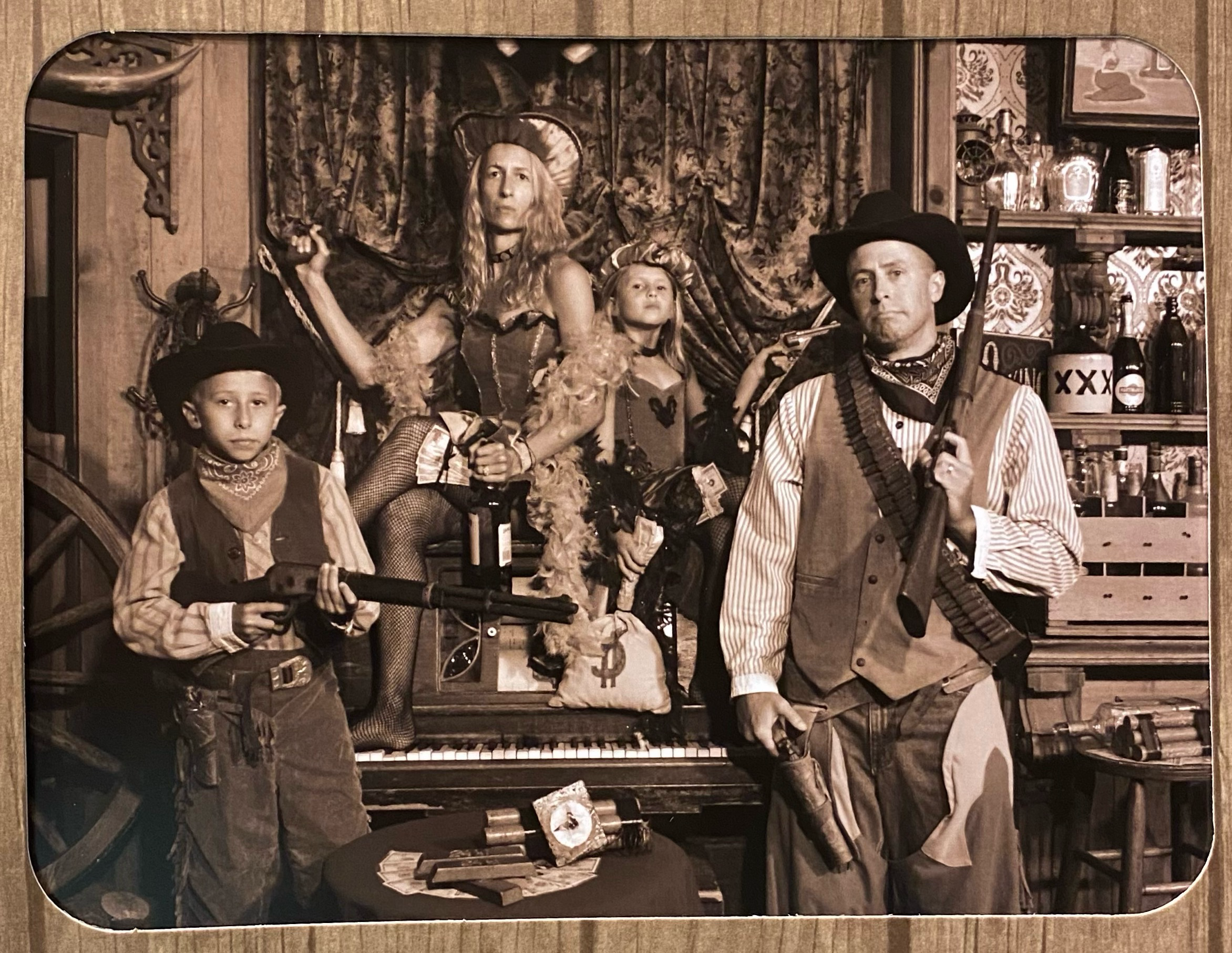
Each clue is rated Strong, Medium, or Weak depending on how reliably it pins down a time period. The AI is also trained to watch for traps — a beloved old car kept for decades, hand-me-down clothing, a retro fashion trend that makes a 1970s photo look like the 1950s, or even a family posing in one of those "Wild West" stores dressed up like an old-West gunman or barmaid.
A Honest Estimate, Not a Magic Answer
What makes this approach valuable isn't that AI produces a single confident year. It's that it produces a reasoned range — with the evidence laid out so you can see exactly why. A typical result might look like:
"Most likely range: 1938–1946 | Best center year: 1942 | Confidence: 72%"
And then it explains what drove that estimate — and what questions, like a closer look at a collar or a shoe style, could tighten the range further.
This is the kind of analysis that used to require hours of library research and specialized genealogical expertise. Now it's part of every Photo Legacy Discovery Kit I deliver.
Putting a human in the loop!
I not only review every photo that we date, but I also review the input. I'll ask AI to look at some parts of the photo that I think deserve more attention, e.g. background architecture or visible shoes.
If my customer provides some information such as the location, I'll have AI research that specific place and time, to add more information for their enjoyment of the photo.
Why This Changes Everything for a Family Gift
When you give someone a framed old photo, you're giving them a moment. When you give them a dated and researched old photo — with a report explaining what the AI found and why — you're giving them a story. Something they can sit with, share, and pass on.
That's the difference between a nice frame and a genuine heirloom.
At MYLEGACYCLOUD.COM we offer two levels of research:
"Entry Level" analysis that provides you with a beautiful PDF for framing. See that here.
Detailed Research and Analysis that follows the rigor of the Genealogical Proof Standard and produces six deliverables PLUS the beautiful PDF for framing. See that here.
So How Did My System Do with the Above Two Photos?
REPORT: "Family in Old West Themed Photo Studio, Unknown Location, Circa 2010-2020"
"...As we delve deeper, we discover that this portrait is not a direct window into the 1880s, but rather a playful, heartfelt homage created in our own time. It reflects a beautiful contemporary fascination with historical themes, offering families like yours a chance to step into a bygone era, not as a direct historical document, but as a cherished memory crafted with artistic flair and love for history's grand narratives. It’s a wonderful example of how we continue to connect with the past through imaginative play."
VERDICT: CORRECT! Photo was taken in a photo studio on the boardwalk in Ocean City, NJ in August 2018.
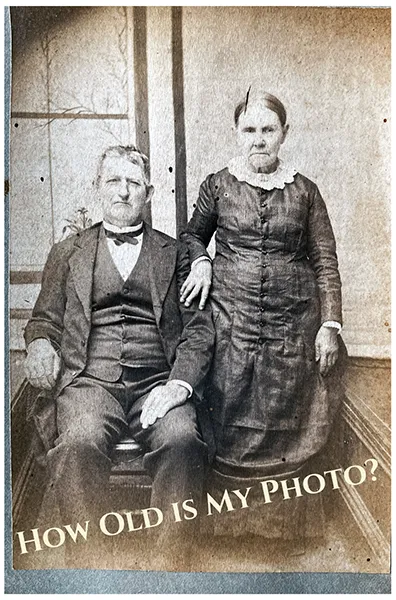
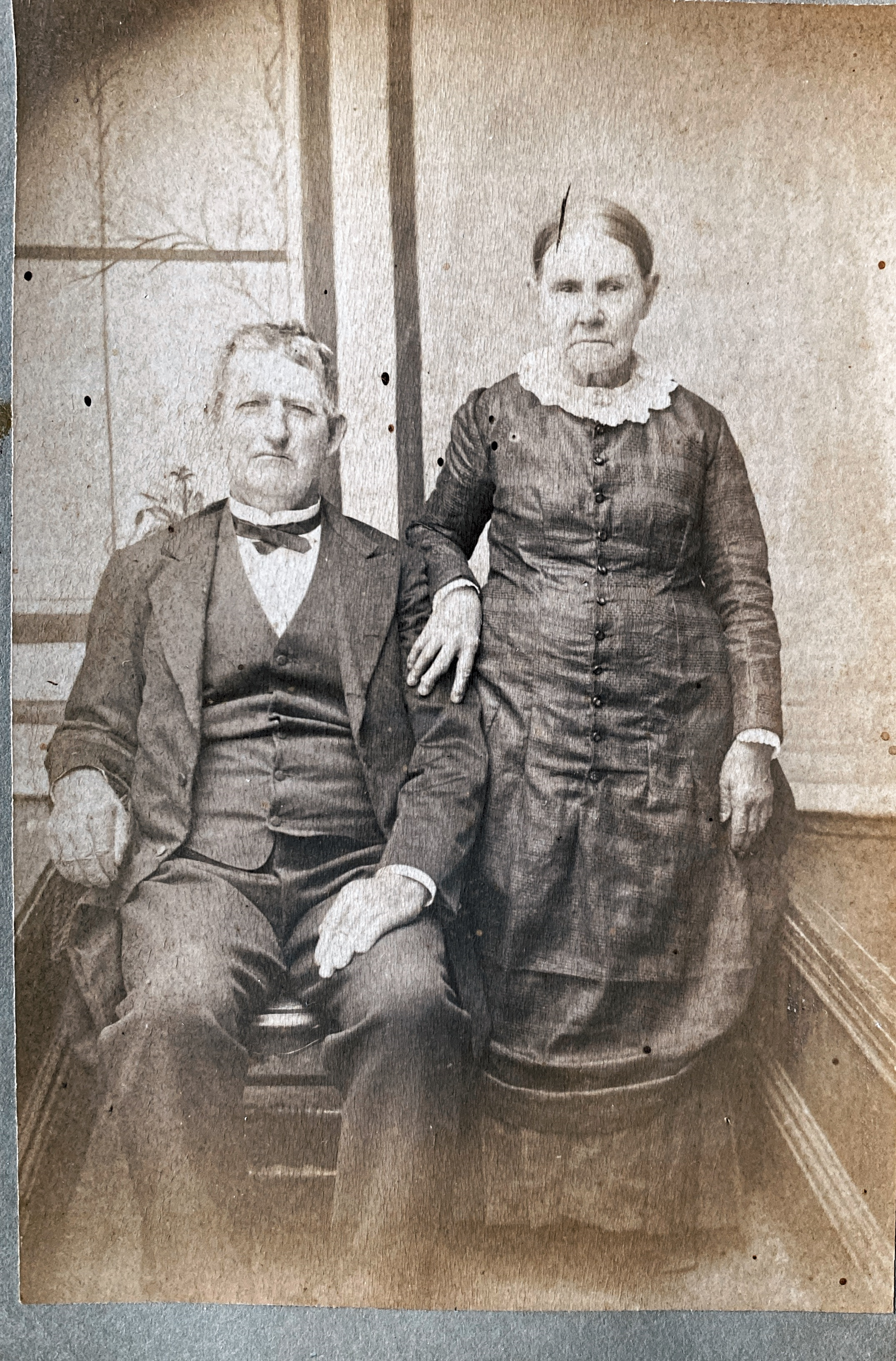
REPORT: "Portrait of an Elderly Couple in a Studio, circa 1890"
Most likely range: 1885–1895 | Best center year: 1890 | Confidence: 90%"
Clothing and Fashion: The woman's dress, with its neatly buttoned bodice and fitted sleeves, is adorned with a prominent white ruffled collar, a highly fashionable accessory from the mid-1880s through the early 1890s. The man's classic three-piece suit, paired with a self-tied bow tie and his full, robust mustache, firmly places his style within the same period, characteristic of gentlemanly attire before the more extreme sleeve styles and less buttoned waistcoats of the later 1890s.
Photographic Format and Paper Type: The warm, brownish-sepia tones, along with the slightly matte texture and fine grain visible upon close inspection, are indicative of either an albumen print or an early gelatin silver print. Albumen prints dominated photography from the 1850s to the 1880s, gradually being superseded by gelatin silver prints in the 1890s, making this print type a strong marker for the late 19th century.
Setting, Props, and Environment: The use of a painted studio backdrop, depicting what appears to be a faux architectural element and perhaps a stylized plant, was a standard practice in professional portrait photography during this era. The simple, solid studio chair on which the man is seated is typical of the minimal props used to anchor subjects for the relatively long exposure times still common in the 1880s and early 1890s.
Visible Text, Signage, or Objects: There is no visible text, signage, or specific dateable objects such as jewelry or watches discernible within the photographic frame itself that could offer additional dating clues.
Other Cultural Markers: The formal, seated pose with the woman's hand resting on the man's arm conveys a traditional and respectable image of a married couple, aligned with the social conventions and portraiture styles prevalent in late 19th-century Western cultures. Their mature appearance suggests they are well into their adulthood, further supporting a broader range within the period.
Curious as to what I might find in your family photos?
Learn more about the Photo Legacy Discovery Kit →